
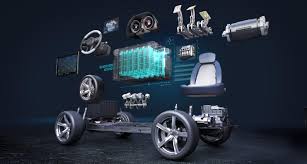

The global transition toward electric vehicles has progressed remarkably over the past decade, but it continues to be bottlenecked by the limitations of conventional lithium-ion batteries. Issues such as limited driving range, slow charging times, and the degradation of battery health over time remain significant barriers to universal adoption. To truly replace internal combustion engines, the automotive industry requires a fundamental leap in energy storage technology.
Enter the solid-state battery, a breakthrough innovation that replaces the volatile liquid electrolyte found in traditional batteries with a solid conductive material. This seemingly simple structural change alters the performance metrics of energy storage entirely. By eliminating the liquid component, solid-state batteries are significantly less prone to catching fire, dramatically increasing the safety profile of high-capacity energy packs.
Beyond safety, the primary allure of solid-state technology lies in its staggering energy density. These next-generation cells can store up to twice as much energy as a lithium-ion battery of the exact same size and weight. For consumers, this translates directly to electric vehicles capable of traveling over seven hundred miles on a single charge, effectively eliminating “range anxiety” once and for all.
Furthermore, the charging speeds enabled by solid-state materials could revolutionize the refueling experience. Because solid electrolytes can handle higher currents without overheating, vehicles can be charged to eighty percent capacity in less than ten minutes. This brings the time spent at a charging station into near-perfect parity with a traditional stop at a gasoline pump, removing a major psychological hurdle for mainstream buyers.
While the laboratory results are undeniably promising, scaling solid-state manufacturing to a commercial level is an immensely complex engineering challenge. High production costs and delicate manufacturing environments mean that widespread market penetration is still a few years away. Nevertheless, as automotive giants invest billions into dedicated production facilities, the solid-state revolution is poised to permanently electrify the transportation sector.


 English